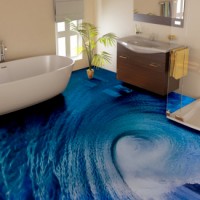
 Epoxy flooring is widely used in all commercial and industrial floor coverings. Epoxy coatings are normally applied on concrete floors and provide a high performance, smooth and durable surface that can last for many years and is not easily damaged even under heavy loads. Many industrial areas, warehouses and commercial buildings prefer epoxy floors to provide clean and safe conditions for workers, equipment and inventory.
A clean and slightly porous surface is required for an epoxy coating to adhere properly and correctly. Epoxy may not be applied to sealed or polished concrete. The surface of the concrete floor must be smooth. Before the epoxy floor coating is applied, it is very important to patch and repair all major cracks and pits on the concrete surface.
Test the surface to find out if the concrete is old, has previous epoxy layers, or has overlaps over the years. Pour a small amount of water on the floor to test the sealant. If the water does not disappear on the surface, but instead remains on the surface as droplets, it is likely that all surface pores are completely closed and may not be suitable for epoxy coating.
Before applying an epoxy coating, make sure the temperature is appropriate and follow the manufacturer’s recommendations of the material you will be using. Adverse temperatures can cause the epoxy coating to blister and peel off. Epoxy is a two part liquid that you mix before applying. Once the product has been mixed, you have limited time to apply the epoxy coating before it hardens.
Epoxy Primer
Depending on the product applied, you may need to apply an epoxy primer and finishing coat. The primer is applied just like paint and left for a few hours. To apply the primer, cover the floor with a thin layer of water, then spread the primer over the entire floor with a long-handled paint roller in a thin layer. Let the primer dry, then apply a second coat.
Advantages of Flooring with Epoxy
Epoxy floor covering price offer many advantages over other conventional coatings applied on concrete:
Creates a glossy surface that can significantly increase the brightness of interior spaces
Offers a solid and durable surface that can withstand heavy and continuous traffic
Durable and easy to clean
Resistant to oil stains and water
Creates a flawless surface that can last for years
Can be combined with paints and colors to mask pits and cracks
Provides a chemically resistant surface for production facilities
The surface offers you more safety as it contains non-slip additives
Floors with many different patterns can be covered, especially very unusual coatings such as 3D can be made.
Prevents wear and tear on existing concrete floors
 Flooring Systems